 All career paths
Community & Social Impact
Create change where it matters.
For people who get angry when something is unfair, and would rather organise than just complain. NGOs, social enterprises and public service: how people build careers around a cause.
20–22 Dec 2026Kuala Lumpur
You might like this if…
- you've organised a gotong-royong, a donation drive or a club event and got people to turn up
- friends in the group chat message you privately when something has gone wrong
- you've noticed who gets left out at school or in your taman, and wanted to fix it
Tasks, not job titles
What the work is actually made of
Every job is a bundle of tasks. Here are six from this area. Try sorting them: which would you hand to AI?
Listen to people before deciding what they need
You ask, take notes and hold back from fixing things until you understand them.
Sort community comments into themes
Dozens of comments say different things, and grouping them shows what most people care about and who disagrees.
Run a residents' meeting
Someone always talks too long and someone never speaks, and your job is to hear both.
Plan a campaign with a clear ask
You decide who should do what, how people will hear about it and how residents get a say, usually on almost no budget.
Write a funding proposal
Funders want to know who benefits, who might be left out and what it costs to run each week.
Check the sources behind a policy claim
Before you quote a study or a government figure, you find the original and check it says what people claim.
0 of 6 sorted
On Day 1 you do this for real with a job you choose, then a practitioner tells you where you were wrong.
Skills you practise
- Empathy
- Project planning
- Fundraising
Who does this work
People you could meet
Practitioners are confirmed for each cohort. These are the kinds of roles in this area and what a day involves.
Programme officer
Runs a programme day to day: plans sessions, tracks who came, manages a small budget and writes the report the funder asks for.
Community organiser
Spends much of the day out in the neighbourhood, meeting residents, calling volunteers and turning complaints into a plan people agree on.
Social entrepreneur
Runs a business built around a cause: selling, paying the bills and checking the work still helps the people it's meant for.
Policy researcher
Reads studies and government data, talks to the people affected, and writes short briefs that argue for one change.
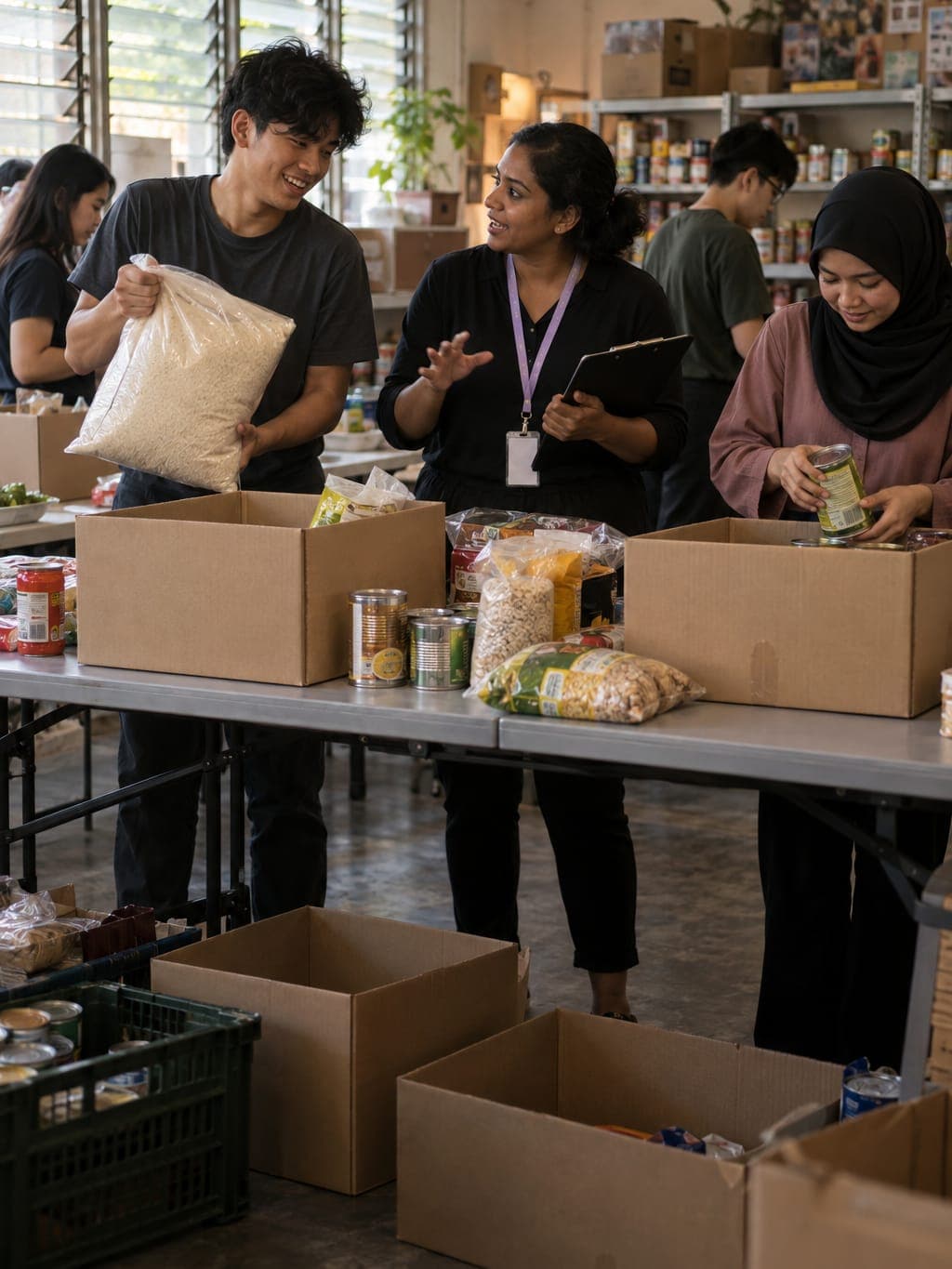
Questions worth asking them
- “How do you build trust with a community you're not part of?”
- “Where does the money for your work come from, and what happens when a grant ends?”
- “What are the risks of using AI with people's personal information, and what are the rules where you work?”
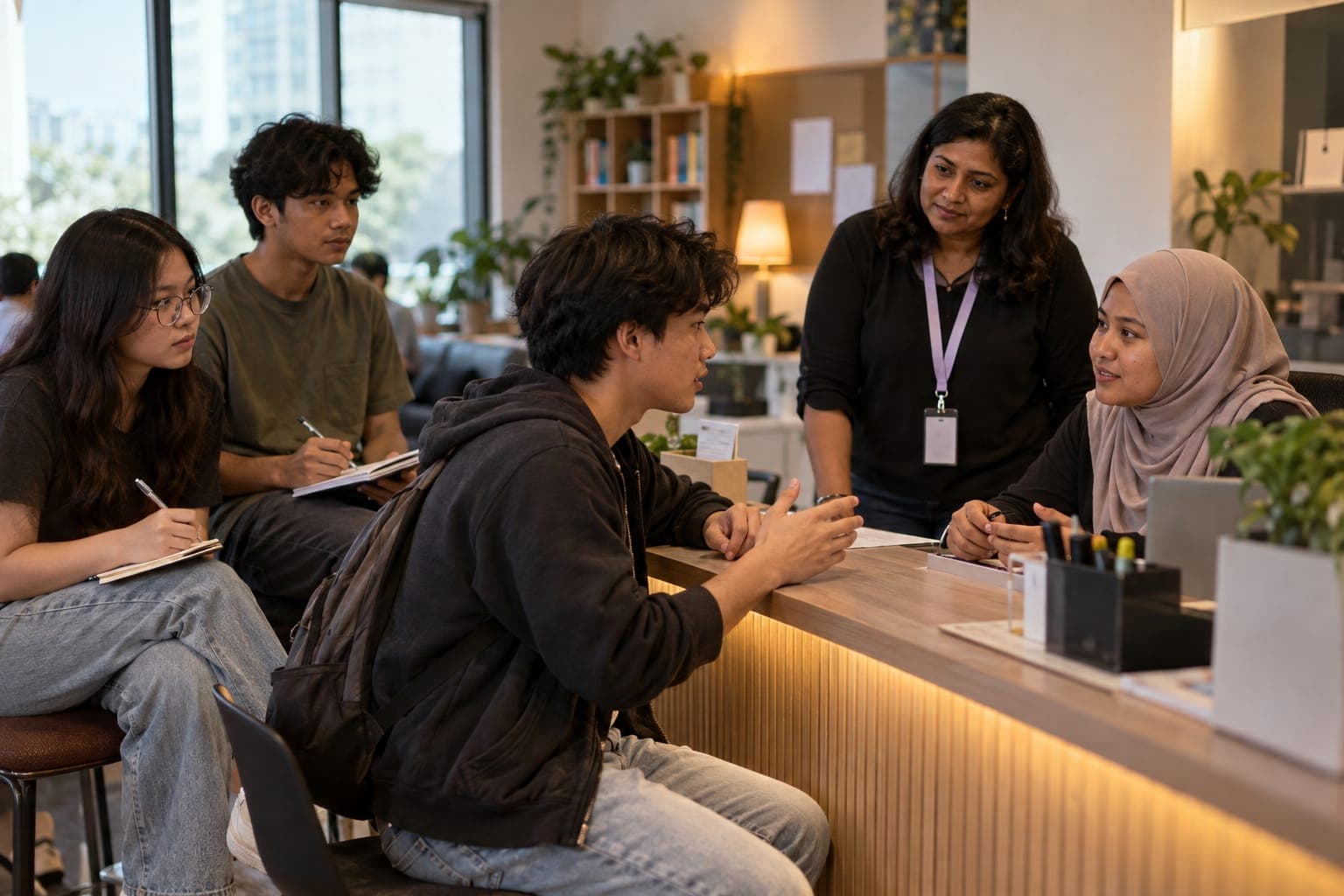
Day 2 · the taster
Where you try it
- Your task
- Design a youth campaign to make a city more liveable, with a practitioner from the field.
- Halfway through
- the residents tell you nobody asked them. How do you change the plan so they shape it, not just hear about it?
You leave with the work you made, what you changed and why, linked to your Future Map.
Routes and money
How people get in, and what it pays
Routes in
- 01Degree in social science
- 02Fellowships
- 03Social enterprise
What each route asks for
- KPM's teaching degree, PISMP, takes SPM leavers straight into an Institut Pendidikan Guru (IPG, a teacher training institute). For the 2026 intake it asked for excellent grades in five subjects, credits in BM, English and Sejarah, and an age of 20 or under on 30 June 2026.
- SPM leavers who enter an IPG study for five years. The 2026 intake had 9,800 places.
- USM's Bachelor of Social Work takes 8 semesters. For 2026/27 it asks for a CGPA of 2.67 in STPM or matrikulasi/asasi, B- in two listed subjects and an excellent interview.
- Parliament passed the Social Work Profession Bill 2026 in July 2026. Social workers in NGOs, community groups, companies and private practice will have to register once it takes effect; we found no start date when we checked on 23 October 2026.
- A diploma at a polytechnic or community college asked for 3 SPM credits and a pass in BM and Sejarah for 2026/27.
- Bernama (Malaysian National News Agency), PISMP 2026 intake: quota raised to 9,800, entry requirements and closing date (Kajang, 31 March 2026) (2026-03-31)
- RTM (Radio Televisyen Malaysia), 9,800 kuota PISMP di IPG (2026-03-31)
- Universiti Sains Malaysia (USM), Unit Pengambilan Pelajar, Syarat am dan syarat khas: Sarjana Muda Kerja Sosial dengan Kepujian (US6762001), Sidang Akademik 2026/2027
- RTM (Radio Televisyen Malaysia), Dewan Rakyat lulus RUU Profesion Kerja Sosial, pengamal swasta wajib berdaftar (2026-07-14)
- RTM (Radio Televisyen Malaysia), Dewan Negara lulus RUU Profesion Kerja Sosial 2026 (2026-07-30)
- Kementerian Pendidikan Tinggi (BKPA, Jabatan Pendidikan Tinggi), Pekeliling Kemasukan ke UA, Politeknik, Kolej Komuniti dan MARA BPT bagi Lepasan SPM Sesi Akademik 2026/2027 (2026)
What it costs and pays
On Day 3 you price each route, compare how long it takes and look up first pay from official sources (the Graduate Tracer Study and DOSM). Sourced figures for this area appear here once the First Move team has reviewed them.
AI and this work
What AI is changing, and what it isn't
Examples to argue with, not forecasts. On Day 1 you test them against a practitioner.
AI can help
Drafting a funding proposal: AI writes a first version, you make sure it's true and sounds like the community.
Might be automated
Sorting and checking application forms for aid.
Still needs a person
Listening to someone in a hard moment and earning their trust.
New work
Checking an automated system isn't quietly leaving out the people a programme is for.
What the evidence says
- The ILO puts social work and counselling professionals (0.28) and secondary teachers (0.30) in its lowest band, "not exposed", on a 0 to 1 scale; government benefits officials score 0.45 (gradient 2). Global generative-AI task-exposure estimates; not a Malaysian forecast; not a job-security rating.
- Government and public sector employers in the World Economic Forum (WEF) survey said people mainly do 53% of tasks today and expected 34% by 2030, with 39% done by people and technology together. Global employer expectation, published 2025.
- WEF employers put social work and counselling professionals and secondary and university teachers among the largest-growing jobs to 2030. Global employer expectation, published 2025; not a Malaysian vacancy count.
- Malaysia's National Guidelines on AI Governance and Ethics (MOSTI, September 2024) are voluntary and include fairness, inclusivity and privacy among seven principles.
- International Labour Organization (Gmyrek, Berg and others), Generative AI and Jobs: A Refined Global Index of Occupational Exposure (ILO Working Paper 140) (2025-05-20)
- World Economic Forum, The Future of Jobs Report 2025 (including economy and industry profiles) (2025-01-07)
- MyGOV portal, Government of Malaysia (guidelines issued by MOSTI), National Guidelines on Artificial Intelligence Governance and Ethics (AIGE) (2024-09)
From the library
Read more about this area
Reviewed guides, each with its sources. Sign in to read them in the First Move library.
Community & Social Impact after SPM: the work, the routes in and how to try it
What cause-driven jobs involve week to week, from teacher and social worker to NGO programme officer, the routes in after SPM with real entry rules, the new social work law, and how to try it on Day 2.
8 min read· 17 sources
AI and the future of Community and Social Impact work: what changes, what stays human
What global estimates and employer surveys say AI may change in NGOs, social work, teaching and public service, what they cannot tell you about Malaysia, how to use people's data responsibly, questions to test, and how to try it on Day 2.
7 min read· 6 sources
Questioning AI output: seven checks before you trust an answer
Seven checks to run on any AI answer: does the source say that, how old is it, do the numbers add up, did the translation keep the meaning, who is left out, what you pasted in, and whether to accept, fix or reject it. With a printable checklist.
8 min read· 9 sources
First-salary simulation: the numbers to use
Sourced inputs for the Day 3 first-salary simulation: starting salaries by route, EPF/SOCSO/EIS and net pay, room rents, My50, food, BNPL rules and emergency-savings yardsticks, with a facilitator run sheet and CSV.
8 min read· 23 sources
Five shifts in work: what is happening, and what is only a guess
Five forces changing work in Malaysia and worldwide: AI, the green transition, an older population, a more divided world economy, and learning for longer. For each: what has been measured, what someone projects (who and when), and a question to ask a practitioner.
8 min read· 17 sources
Task trial kit: fix the missed appointments (90 minutes)
The 90-minute Day 2 task trial: teams improve a fictional community service centre's missed appointments within a fictional RM2,000 a month, check AI output, adapt when fewer visitors have smartphones, and explain one decision.
6 min read· 10 sources
Explore other paths
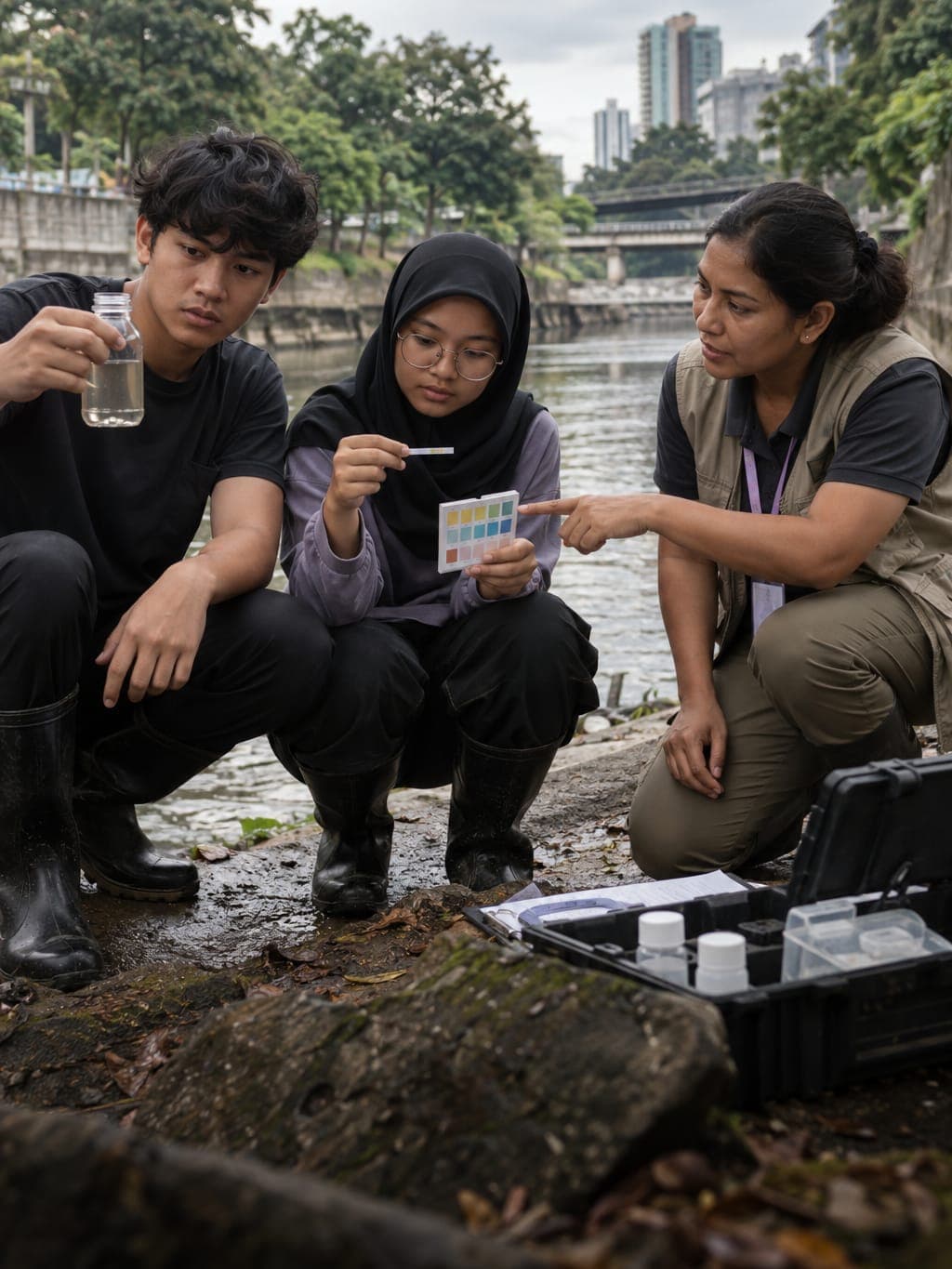 Green
Environment & Sustainability
Build a more resilient future.
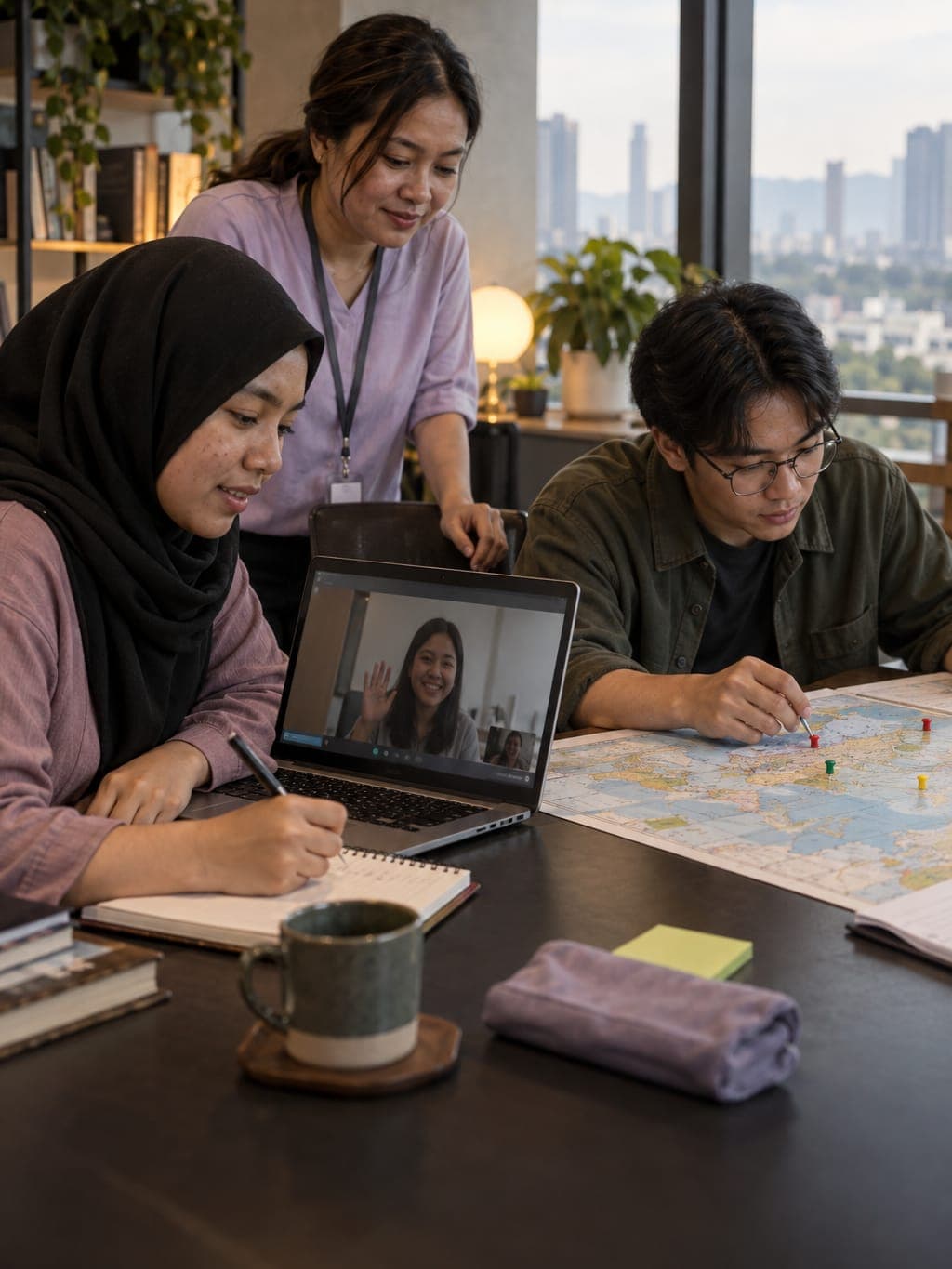 Global
 Opportunities
Explore study, work and exchange pathways.
 Creative
Media & Creative
Content, design, film, marketing and more.
 Tech
Technology & AI
Build, create and solve real-world problems with technology.
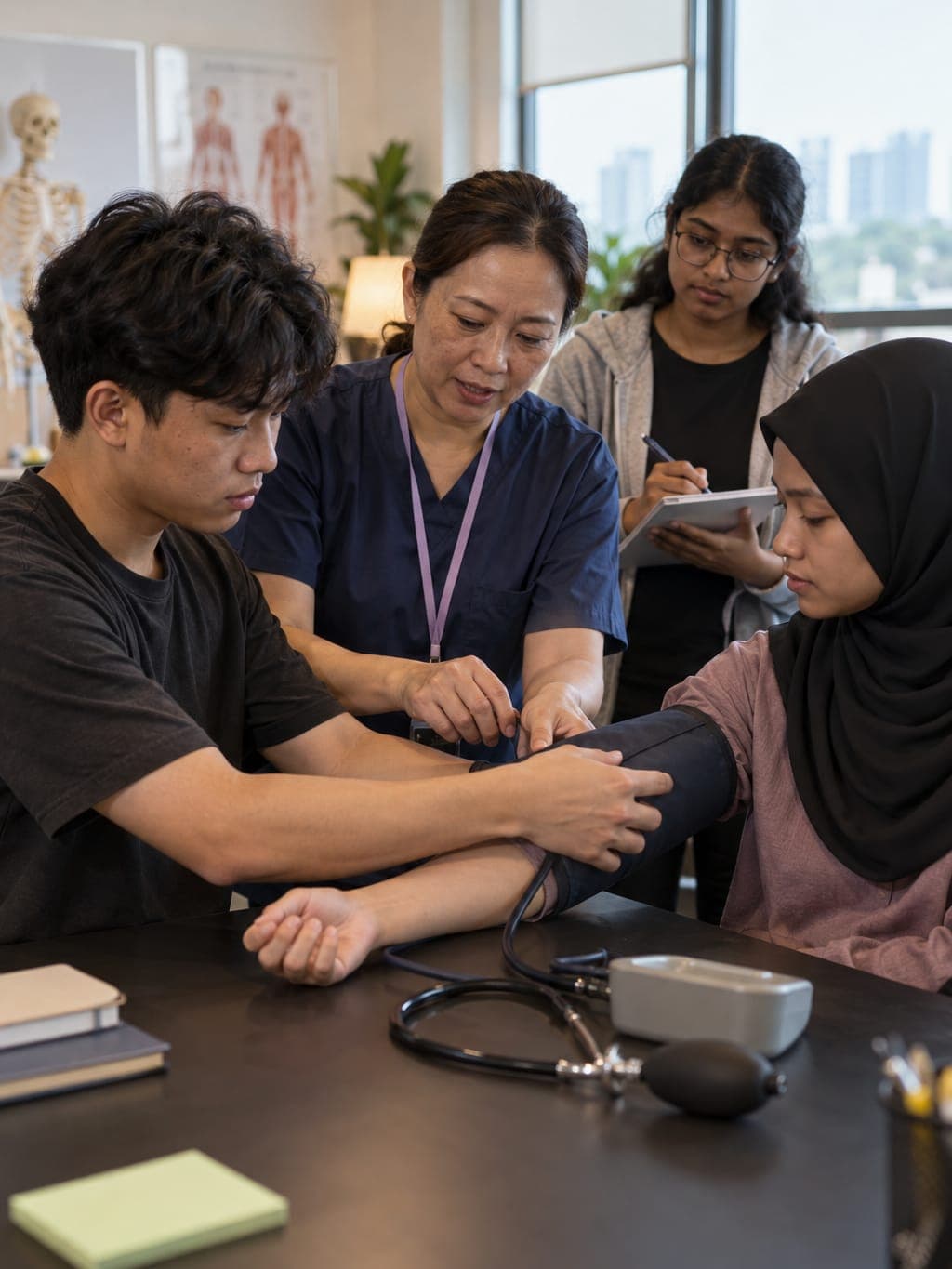 Health
 & Science
People, research and healthier societies.
 Business
 & Enterprise
From ideas to impact in the real world.
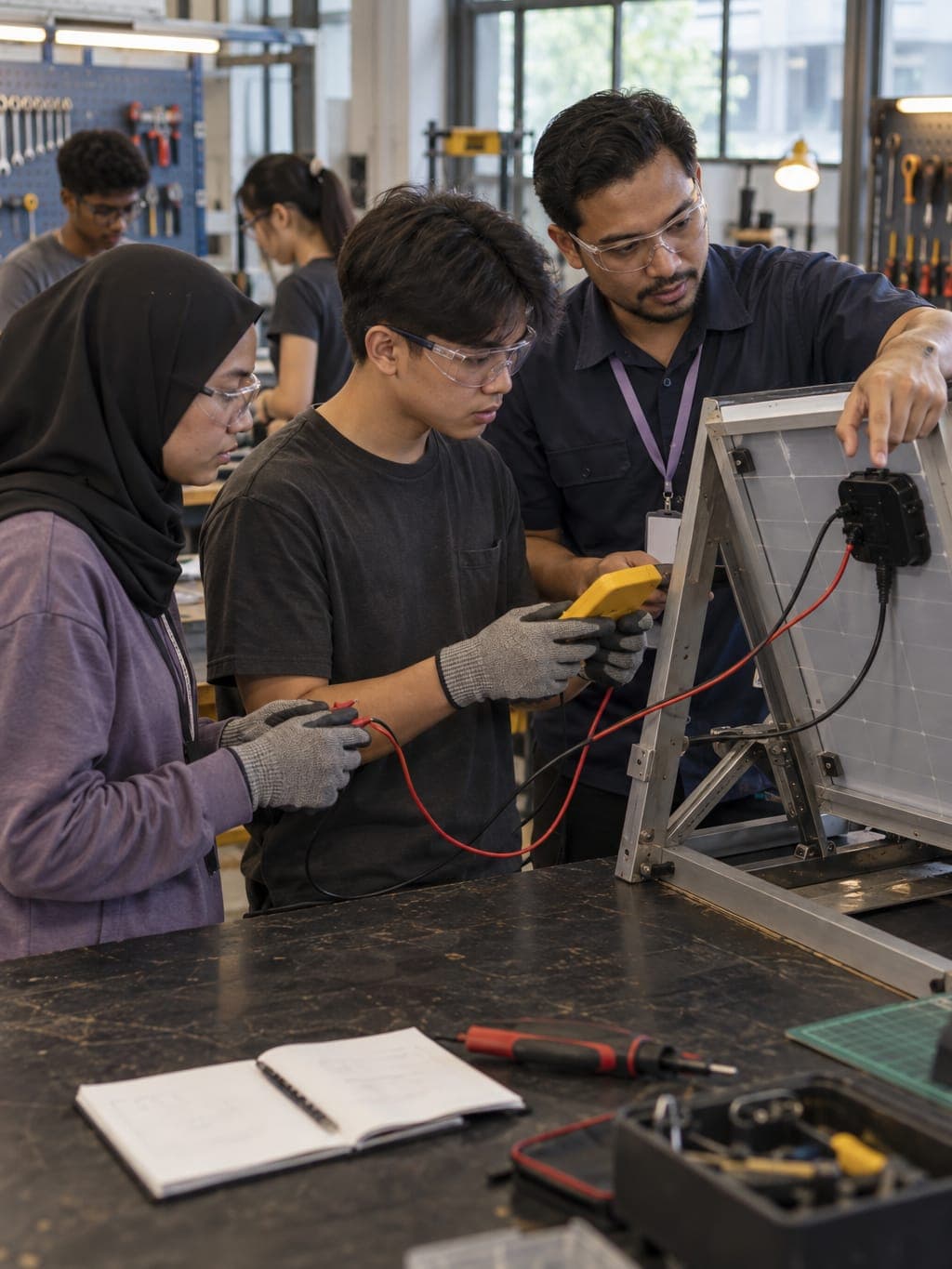 Trades
Engineering & Skilled Trades
Make, fix and power the things everyone relies on.
Try Community & Social Impact for real
After you book, you rank the eight areas. Your top picks shape your two Day 2 tasters; the team sets the final groups.