 All career paths
Engineering & Skilled Trades
Make, fix and power the things everyone relies on.
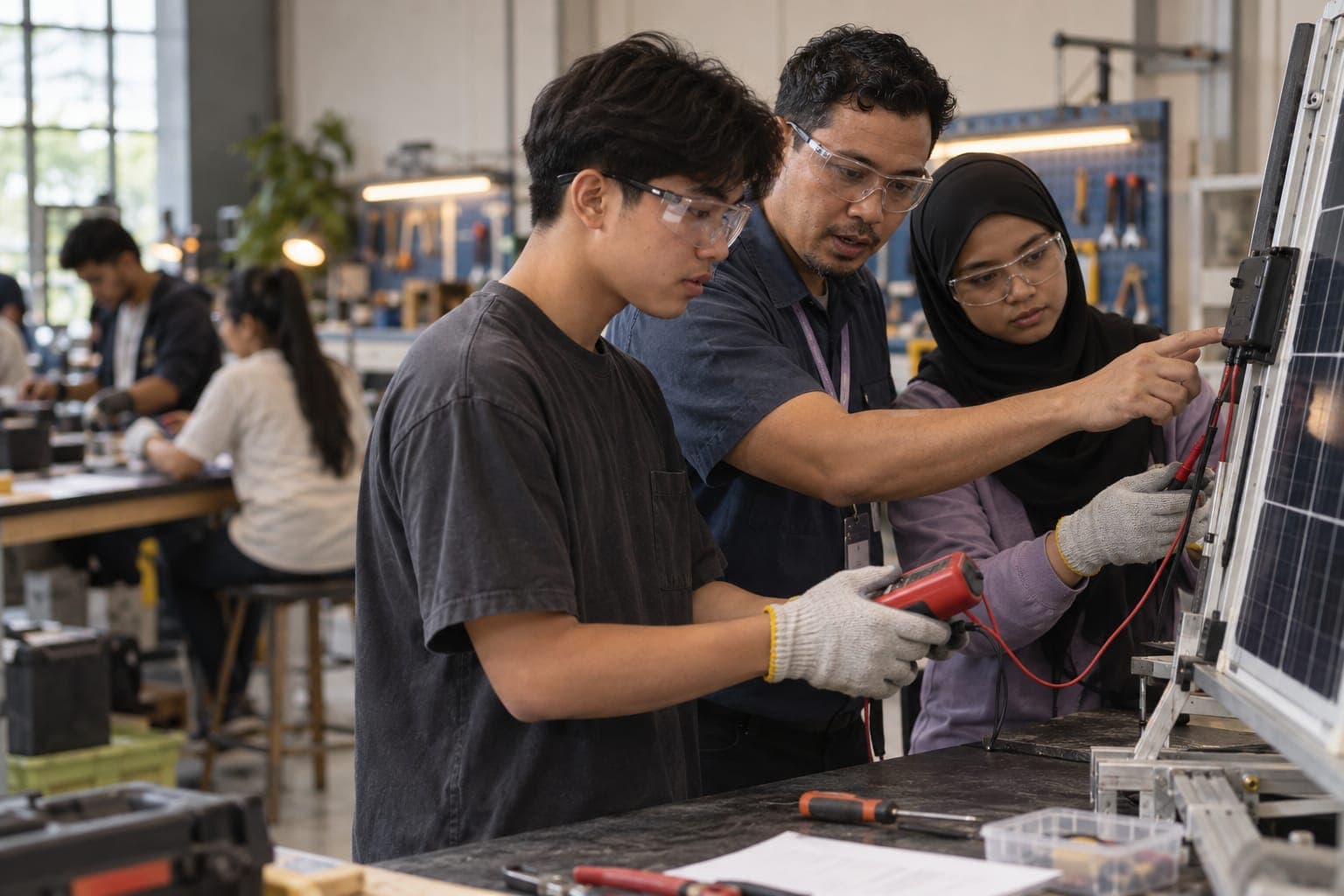
For people who like working with their hands, and want to know a thing is safe before anyone uses it. Skilled trades are a TVET career with their own routes in and ways to grow. On Day 1 you compare them using sourced figures.
20–22 Dec 2026Kuala Lumpur
You might like this if…
- you're the one the family calls when the router or the ceiling fan stops working
- you've helped fix a motorbike, a bicycle or a leaking tap and wanted to know why it broke
- you liked building the model for a school project more than writing it up
Tasks, not job titles
What the work is actually made of
Every job is a bundle of tasks. Here are six from this area. Try sorting them: which would you hand to AI?
Run a safety check before work starts
Switch off and lock the power, check the tools and read the site rules: dull, and the part that stops people getting hurt.
Test the wiring in a building
You trace each circuit, test it with a meter and write down exactly what you found, not what you expected.
Find and fix a fault in a machine
A fault code or a manual gives clues; your hands, ears and experience tell you which one is right.
Check site work against the drawings
You walk the site, measure what was built and flag anything that doesn't match before it's covered up.
Install and connect solar panels on a roof
It's hot, high and heavy work, done in a harness with every connection checked twice.
Write up the quote and the job report
Quantities, prices and safety notes get checked line by line, because the client will hold you to them.
0 of 6 sorted
On Day 1 you do this for real with a job you choose, then a practitioner tells you where you were wrong.
Skills you practise
- Technical reasoning
- Safety
- Working with your hands
Who does this work
People you could meet
Practitioners are confirmed for each cohort. These are the kinds of roles in this area and what a day involves.
Electrician
Moves between houses or sites, installs and tests wiring, finds faults, explains the problem to the owner and writes up what was done.
Mechatronics technician
Keeps automated machines on a factory line running, fixes breakdowns, sets up sensors and reads machine data to catch faults early.
Civil engineer
Splits the day between office and site: checking drawings and schedules, then walking the site, measuring and running safety briefings.
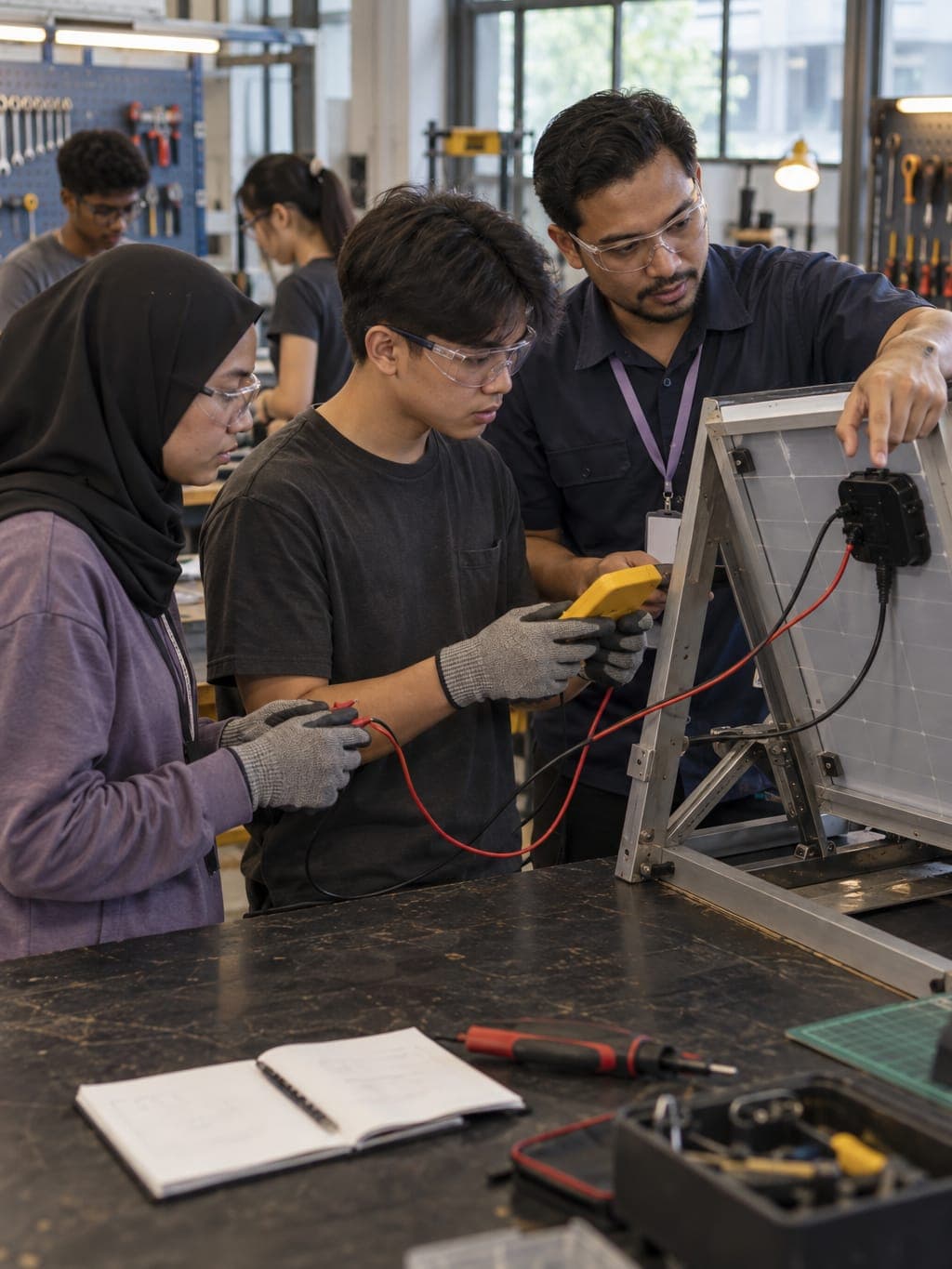
Solar installer
Starts early before the roof gets too hot, carries and fixes panels, wires them up safely and shows the owner how the system works.
Questions worth asking them
- “How much of your week is hands-on, and how much is paperwork or a screen?”
- “Which safety rule matters most where you work, and what happens when someone skips it?”
- “If you start as a technician, what does it take to move up to supervisor or engineer?”
Day 2 · the taster
Where you try it
- Your task
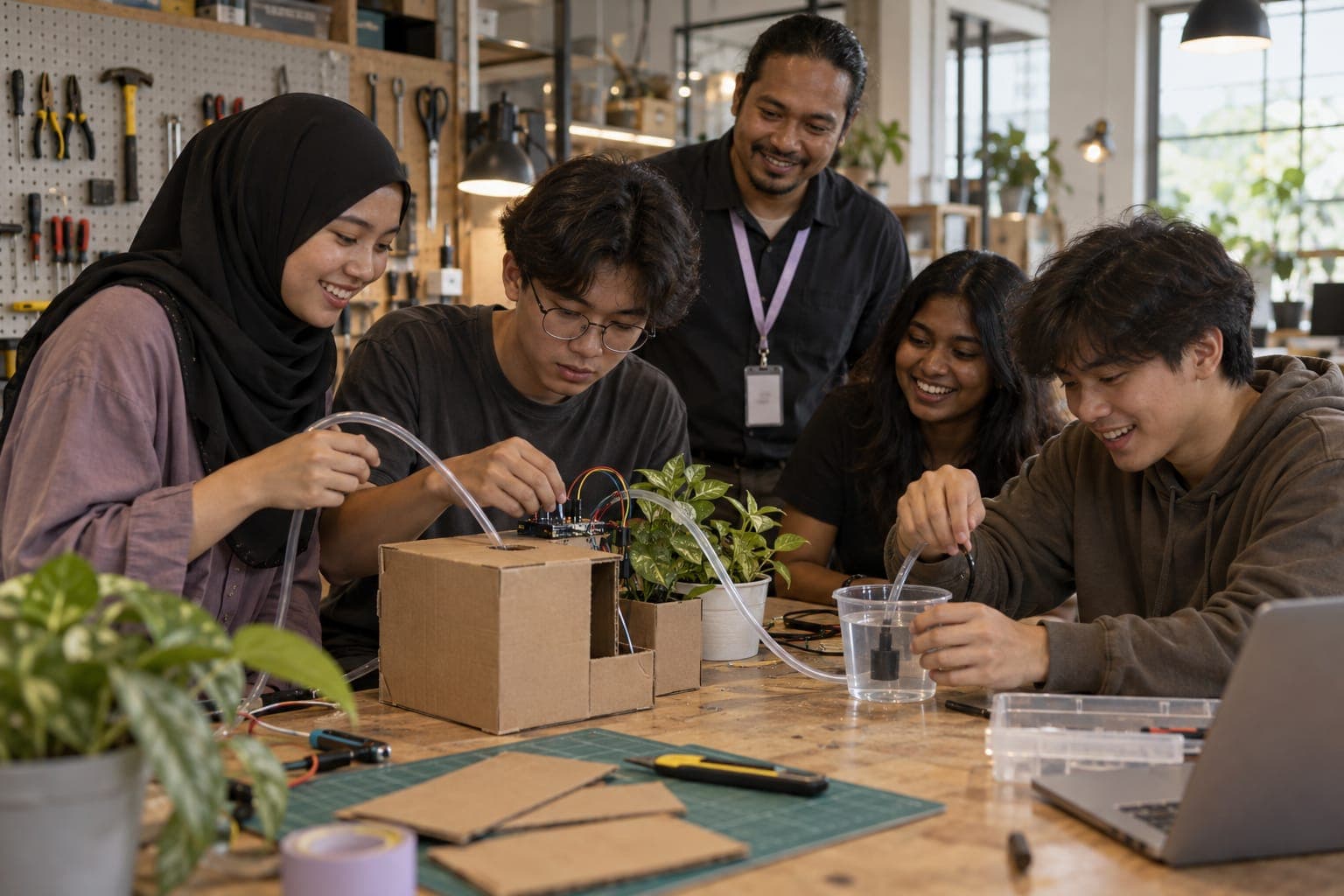
- Design and build a safe tabletop challenge with an engineer, then see how the real job differs.
- Halfway through
- the engineer takes away a third of your materials. What do you cut, and how do you know it's still safe?
You leave with the work you made, what you changed and why, linked to your Future Map.
Routes and money
How people get in, and what it pays
Routes in
- 01TVET diploma
- 02Engineering degree
- 03Apprenticeship
What each route asks for
- ADTEC Kuala Lumpur's 24-month three-phase wiring course has free tuition and pays RM100 a month in pocket money. It takes SPM leavers aged 17 to 35 with at least an E in Bahasa Melayu, Sejarah, Mathematics and a science or technical subject.
- Nine polytechnic engineering diplomas accept a D or E in SPM Mathematics and English, with 3 credits including a science, technical or vocational subject and a Mathematics course in your first semester.
- Anyone who carries out or supervises electrical work must be certified by the Energy Commission. A wireman needs to be 18 or over, have finished Form 5 and have two years of wiring experience.
- Construction site workers must register with CIDB from age 16, with a safety certificate such as the SICW induction course.
- To register as a Graduate Engineer with the Board of Engineers Malaysia (BEM) you need an accredited engineering degree.
- The UP_TVET intake for January 2027 closes on 16 November 2026.
- TVET Malaysia (UP_TVET), Sijil Teknologi Elektrik Pendawaian Tiga Fasa (SMET03), ADTEC JTM Kampus Kuala Lumpur
- Jabatan Pendidikan Politeknik dan Kolej Komuniti (KPT), Portal Ambilan Politeknik dan Kolej Komuniti (MyPOLYCC)
- Suruhanjaya Tenaga (Energy Commission), Register as Competent Person
- Suruhanjaya Tenaga (Energy Commission), Wireman
- Construction Industry Development Board Malaysia (CIDB), Construction Personnel Registration
- Board of Engineers Malaysia (BEM), Registration
- TVET Malaysia (UP_TVET), TVET Perdana: Ambilan 1/2027
What it costs and pays
On Day 3 you price each route, compare how long it takes and look up first pay from official sources (the Graduate Tracer Study and DOSM). Sourced figures for this area appear here once the First Move team has reviewed them.
AI and this work
What AI is changing, and what it isn't
Examples to argue with, not forecasts. On Day 1 you test them against a practitioner.
AI can help
Finding a fault: AI suggests likely causes from codes and manuals, your hands confirm it.
Might be automated
Assembling circuit boards on a production line, more by machines than by AI.
Still needs a person
Rewiring an old house, where no two ceilings are the same.
New work
Setting up, programming and repairing robots on an automated line.
What the evidence says
- The ILO puts building electricians (0.19), plumbers (0.18), motor mechanics (0.18) and welders (0.13) in its lowest band, "not exposed", on a 0 to 1 scale. Global generative-AI task-exposure estimates; not a Malaysian forecast; not a job-security rating. The index does not cover robots.
- A US model by Anthropic (September 2026) estimates robots could technically do about 74% of US physical tasks, mostly in limited settings, but are cost-competitive for only 0.3% of job tasks today. US model data, not Malaysian demand.
- Electronics employers in the World Economic Forum (WEF) survey said people mainly do 40% of tasks today and expected 25% by 2030; 87% plan to automate more processes. Global employer expectation, published 2025.
- Malaysia's National Semiconductor Strategy, launched in May 2024, set a target to train and upskill 60,000 high-skilled engineers. A target, not an outcome.
- International Labour Organization (Gmyrek, Berg and others), Generative AI and Jobs: A Refined Global Index of Occupational Exposure (ILO Working Paper 140) (2025-05-20)
- Anthropic, What work can robots do? (2026-09-30)
- World Economic Forum, The Future of Jobs Report 2025 (including economy and industry profiles) (2025-01-07)
- MIDA (Bernama), Malaysia aims to woo RM500 bln investments in phase 1 of NSS - PM Anwar (Bernama, republished by MIDA) (2024-05-28)
From the library
Read more about this area
Reviewed guides, each with its sources. Sign in to read them in the First Move library.
Engineering & Skilled Trades after SPM: the work, the routes in and how to try it
What electricians, technicians and engineers do each week, the routes in after SPM (a TVET skills course, a polytechnic diploma, matrikulasi to a degree, an apprenticeship), the licences each job needs, and how to try the work now.
9 min read· 14 sources
AI and the future of Engineering and Skilled Trades: what changes, what stays human
What global estimates, a US robot model and Malaysian plans say may change in electrical, mechanical, construction and factory work, what they cannot tell you, questions to test with a practitioner, and how to try the work on Day 2.
8 min read· 8 sources
How to check a course is accredited (MQA and professional bodies)
How to look up any programme on MQA's register, read its dates and campus, tell provisional from full accreditation, and check the professional body for engineering, medicine, pharmacy, nursing and accounting before you pay a deposit.
12 min read· 34 sources
CIDB course: Construction safety induction (SICW) for the Green Card
CIDB's one-day construction safety and health induction (SICW), open from age 16, which you need before you can register for the CIDB Green Card to work on a building site. Paid. Not a Mereka course.
3 min read· 5 sources
First-salary simulation: the numbers to use
Sourced inputs for the Day 3 first-salary simulation: starting salaries by route, EPF/SOCSO/EIS and net pay, room rents, My50, food, BNPL rules and emergency-savings yardsticks, with a facilitator run sheet and CSV.
8 min read· 23 sources
Five shifts in work: what is happening, and what is only a guess
Five forces changing work in Malaysia and worldwide: AI, the green transition, an older population, a more divided world economy, and learning for longer. For each: what has been measured, what someone projects (who and when), and a question to ask a practitioner.
8 min read· 17 sources
Explore other paths
 Social impact
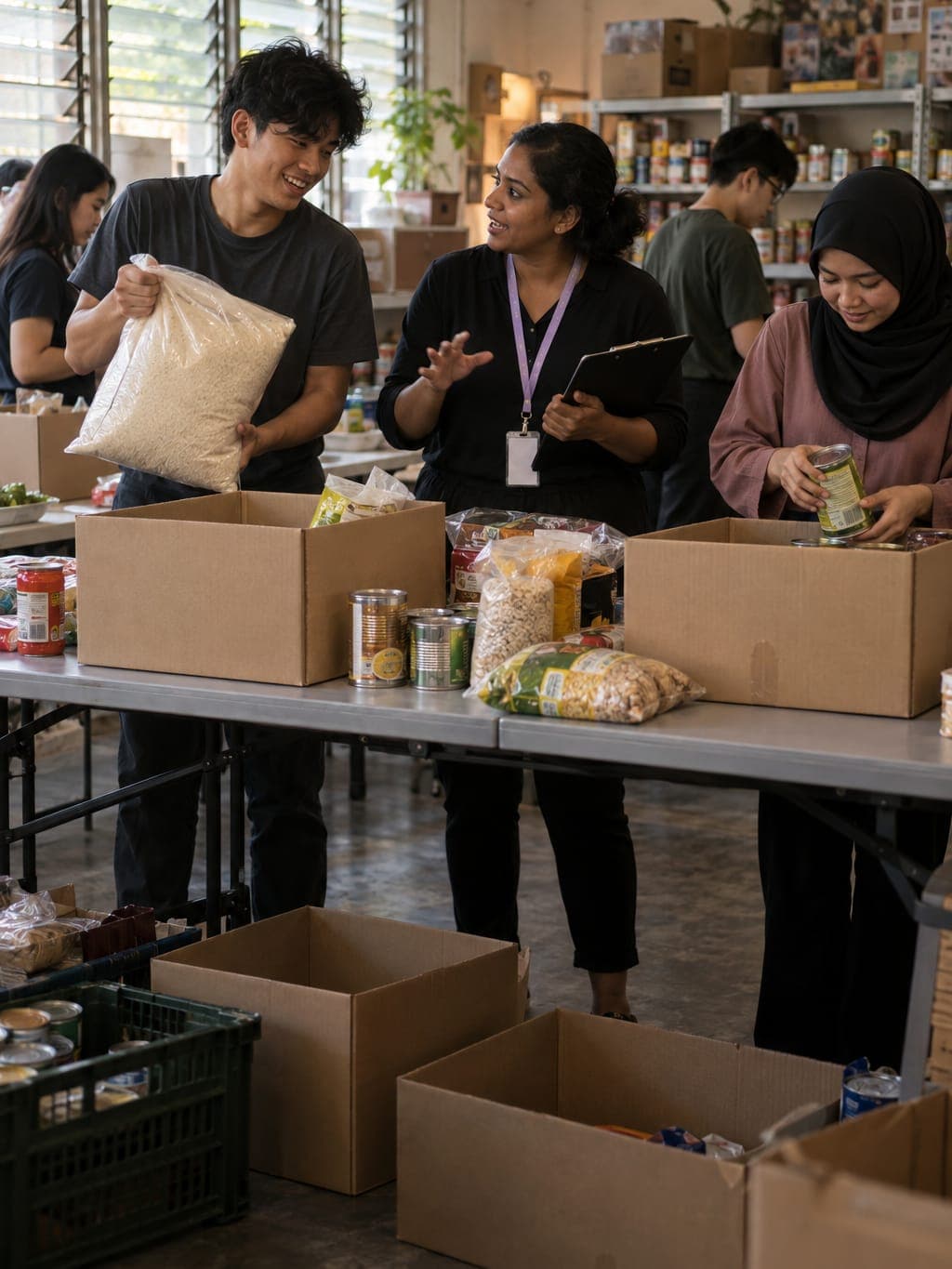
Community & Social Impact
Create change where it matters.
 Green
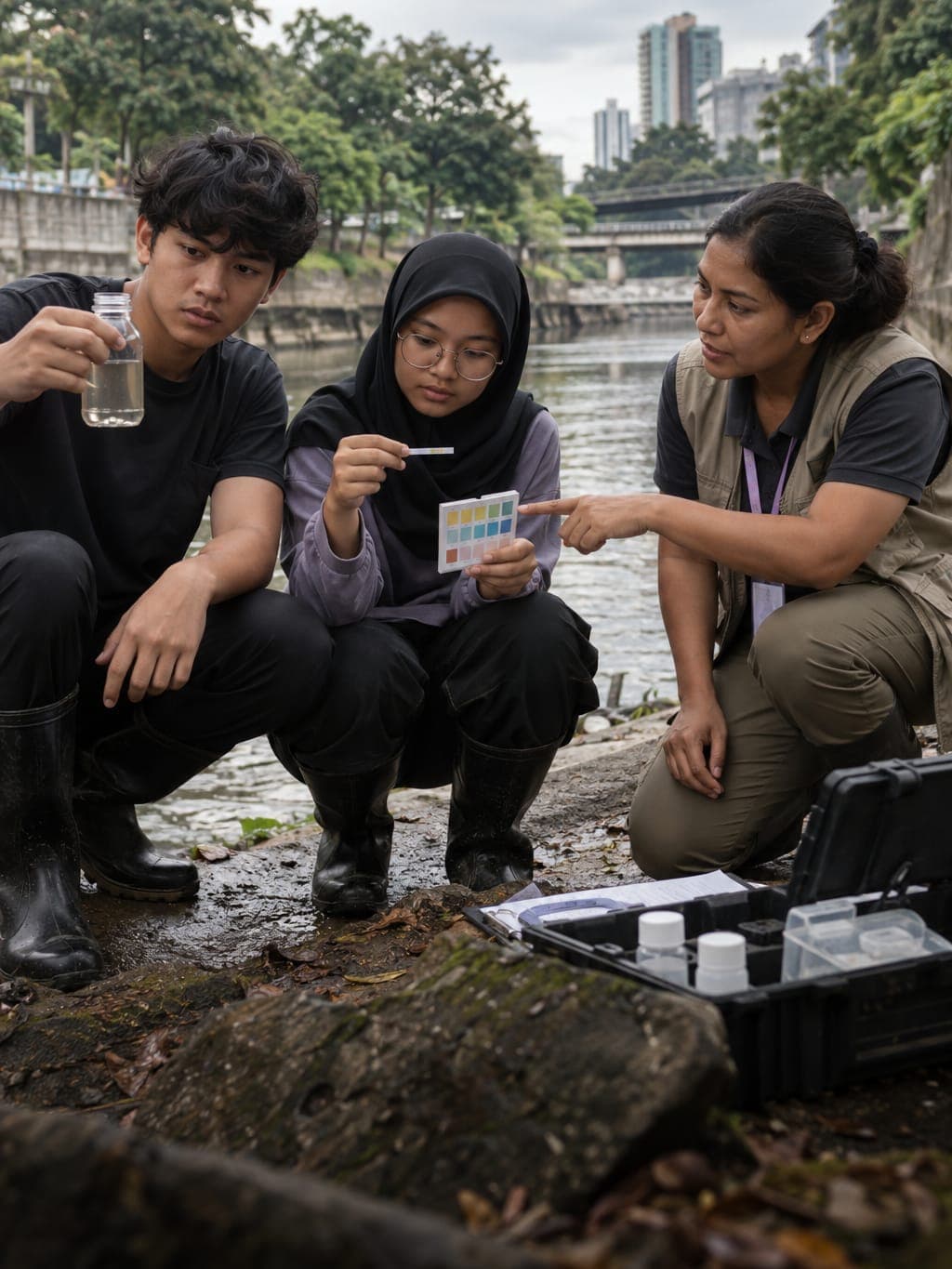
Environment & Sustainability
Build a more resilient future.
 Global
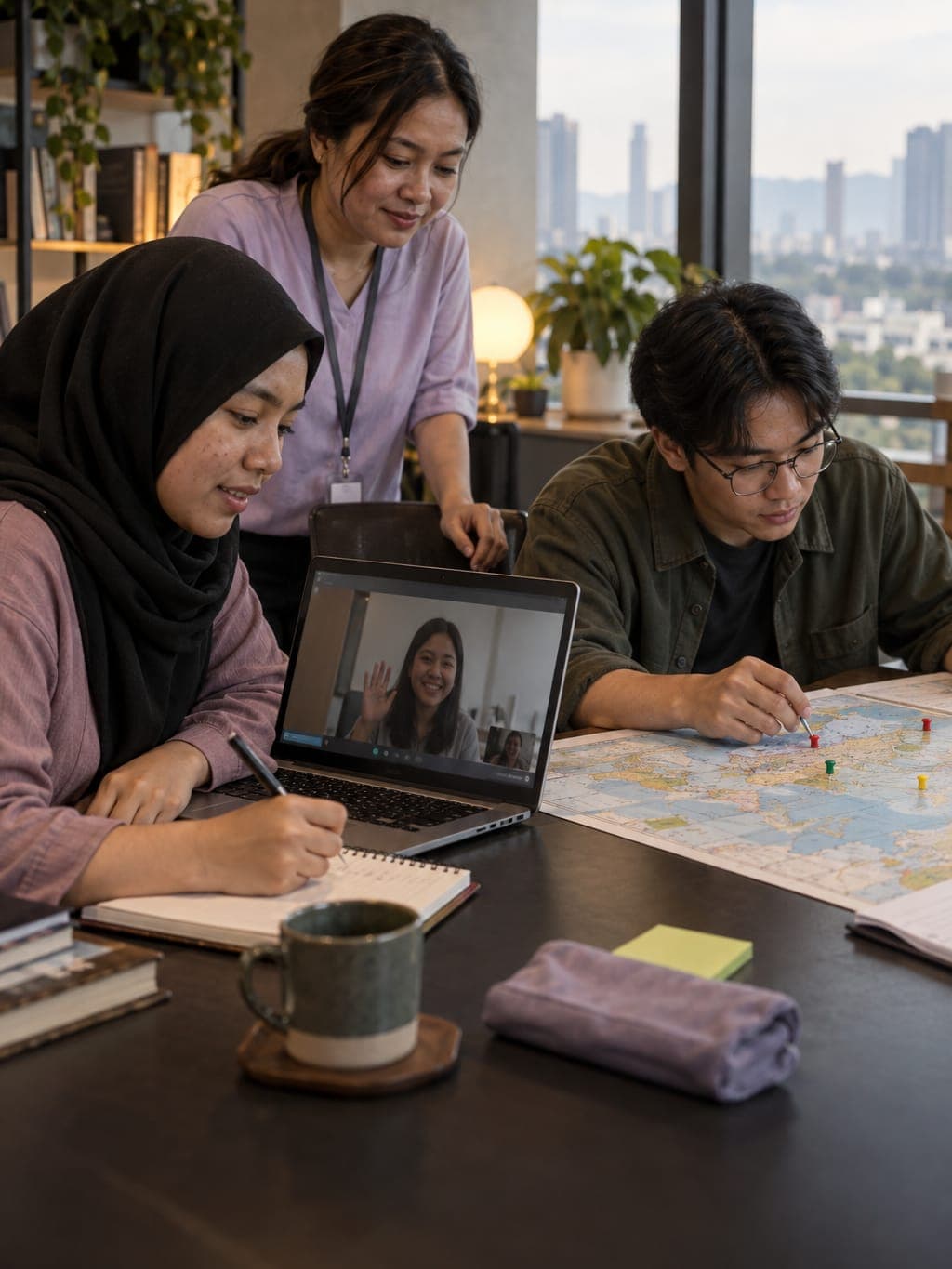
 Opportunities
Explore study, work and exchange pathways.
 Creative
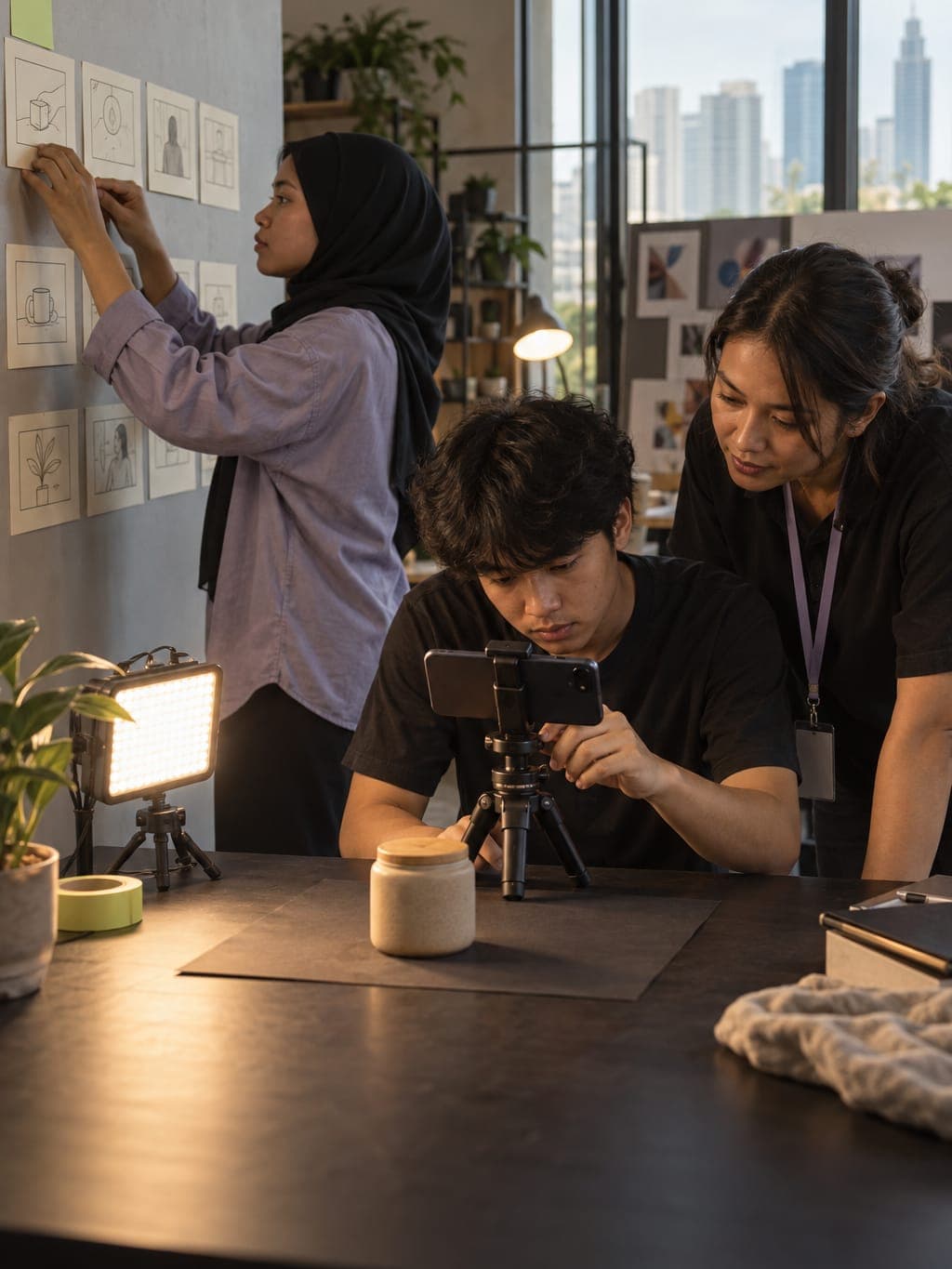
Media & Creative
Content, design, film, marketing and more.
 Tech
Technology & AI
Build, create and solve real-world problems with technology.
 Health
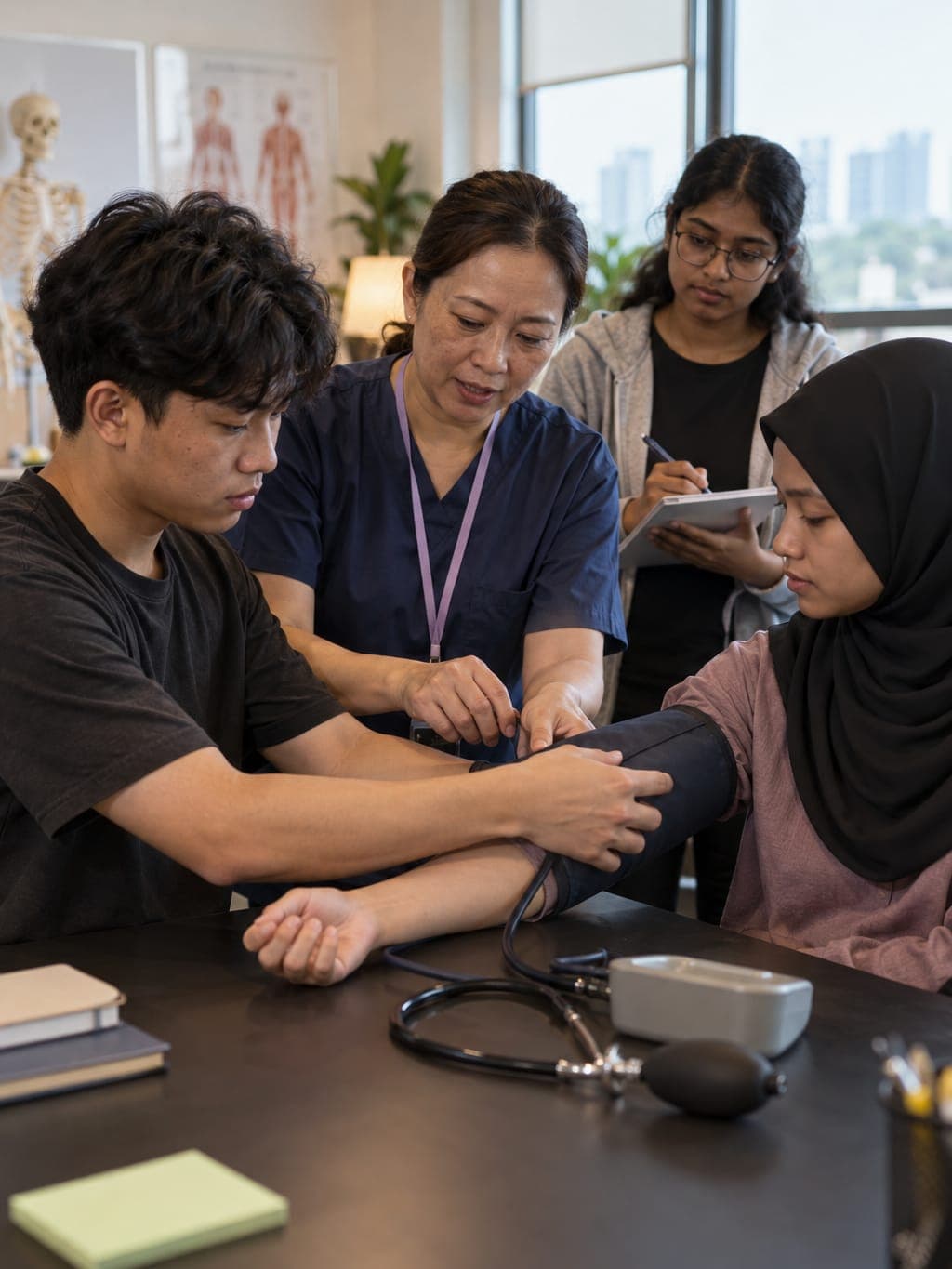
 & Science
People, research and healthier societies.
 Business
 & Enterprise
From ideas to impact in the real world.
Try Engineering & Skilled Trades for real
After you book, you rank the eight areas. Your top picks shape your two Day 2 tasters; the team sets the final groups.