 All career paths
Health & Science
People, research and healthier societies.
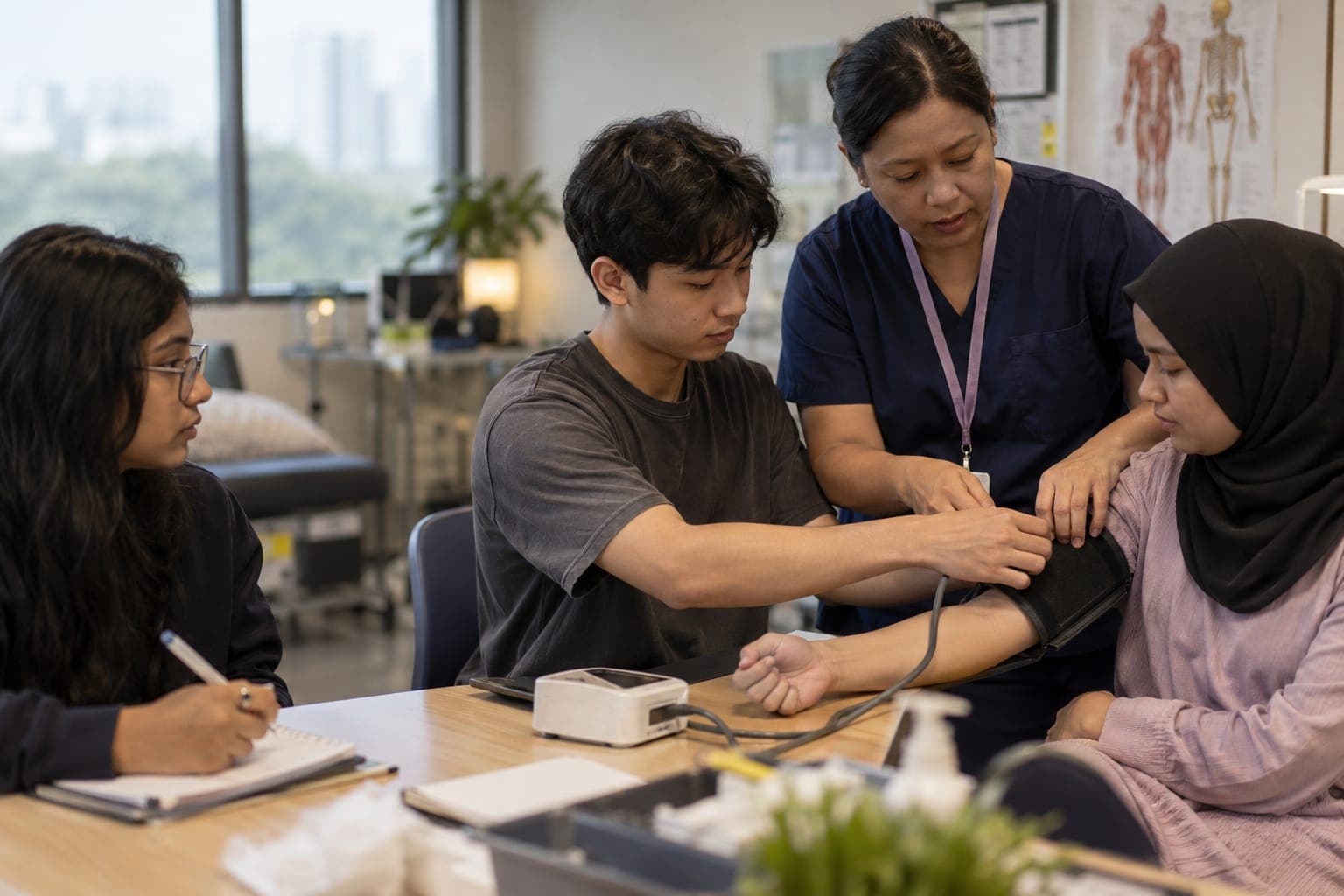
For people who want to know why people get ill, and who care about getting the details exactly right. Go beyond doctor or nurse: labs, public health, allied health and the science behind care.
20–22 Dec 2026Kuala Lumpur
You might like this if…
- you joined the first-aid team at school and actually enjoyed the drills
- you've helped look after a grandparent and noticed what made their day easier
- you liked the Biology or Chemistry practicals more than copying the notes
Tasks, not job titles
What the work is actually made of
Every job is a bundle of tasks. Here are six from this area. Try sorting them: which would you hand to AI?
Test a sample and log the result
Careful hands, the right label and an exact record: one mix-up and the result can't be trusted.
Check a prescription before it's handed over
Software flags medicines that clash, but the pharmacist reads it again and asks the patient a few questions.
Guide a patient through rehabilitation exercises
You watch how they move, adjust the exercise and keep them going when it hurts or gets boring.
Tally health data and spot a pattern
You count cases by day, place and reason, then ask whether the pattern is real or a recording mistake.
Check a research summary against the original study
AI finds and summarises papers fast; you open each one to see that it exists and says what's claimed.
Turn findings into one clear recommendation
A busy committee wants one thing to do, how sure you are and what it costs, in plain words.
0 of 6 sorted
On Day 1 you do this for real with a job you choose, then a practitioner tells you where you were wrong.
Skills you practise
- Evidence and data
- Care and communication
- Precision
Who does this work
People you could meet
Practitioners are confirmed for each cohort. These are the kinds of roles in this area and what a day involves.
Biomedical scientist
Runs and checks tests on samples in a hospital or research lab, looks into odd results and keeps every record accurate and private.
Physiotherapist
Sees a run of patients, assesses how each one moves, sets exercises, adjusts them as people improve and writes up notes between sessions.
Public health officer
Looks at data on cases in an area, visits homes or food premises, and explains to people what needs to change and why.
Pharmacist
Checks prescriptions, answers questions at the counter, explains how and when to take a medicine and spots clashes the software missed.
Questions worth asking them
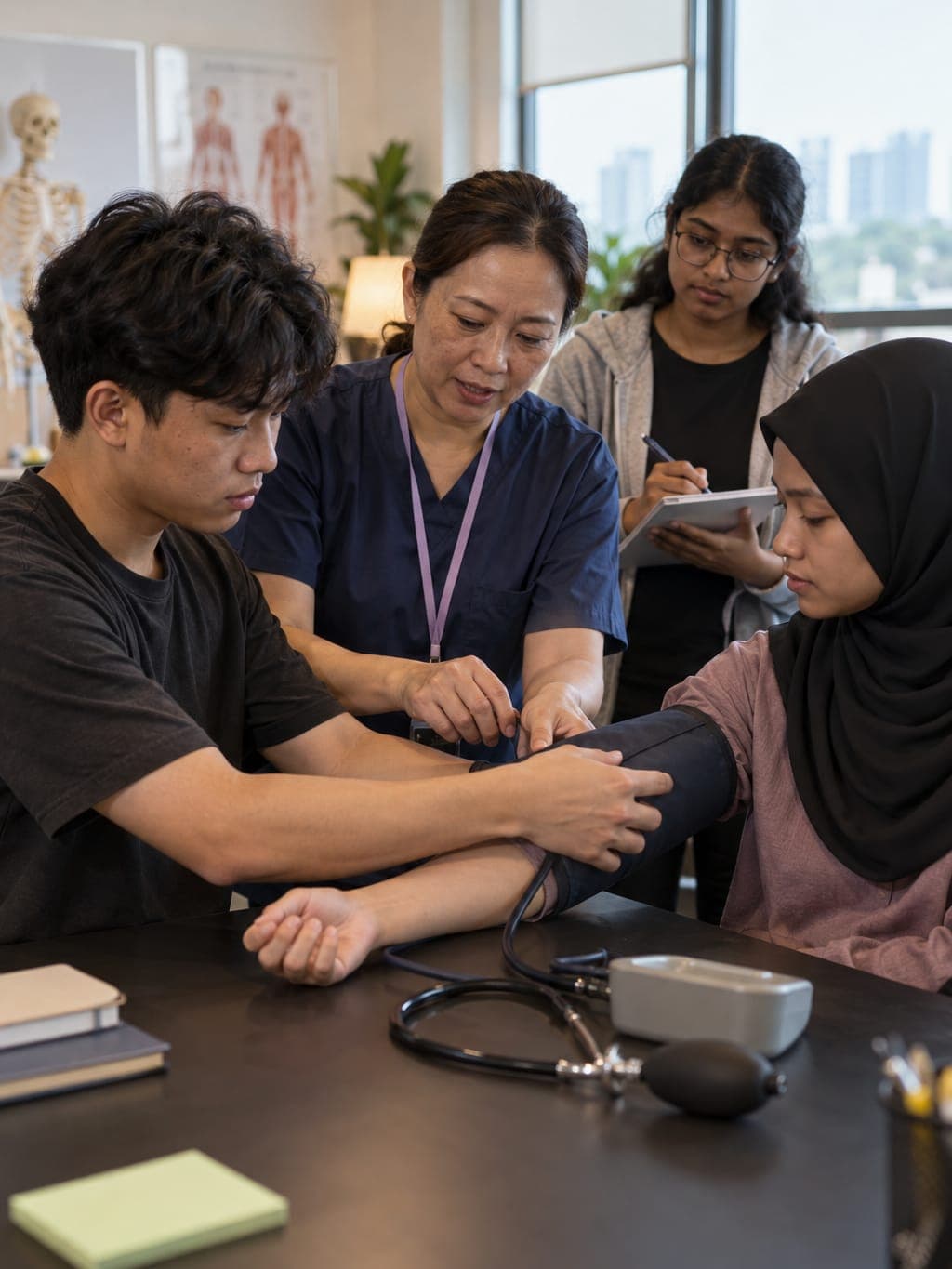
- “Walk us through a real day: how much is with people, at the bench or at a desk with data?”
- “How do you check a result is right before anyone relies on it?”
- “Which part of your work would you never hand to AI, and why?”
Day 2 · the taster
Where you try it
- Your task
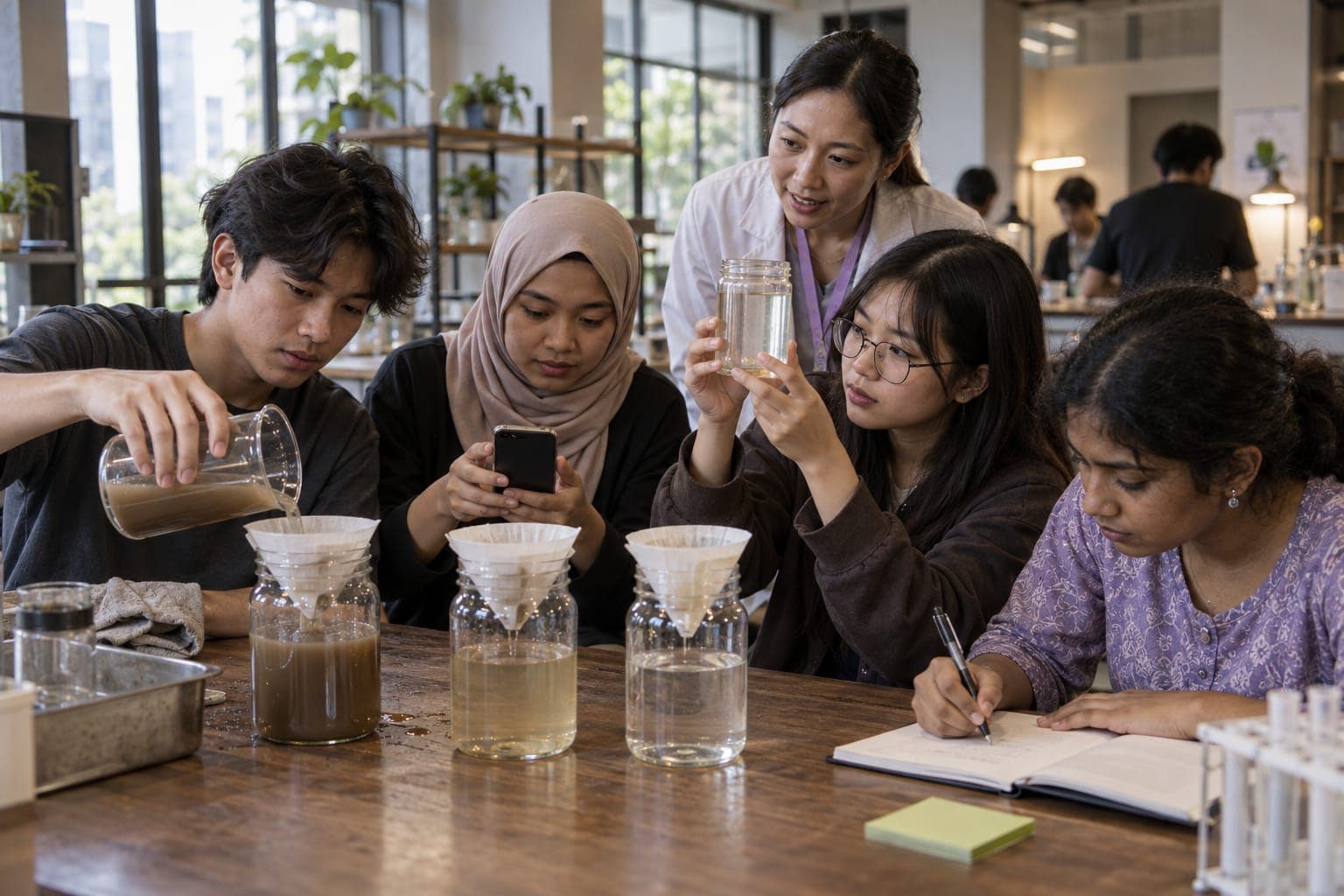
- Work a practice public-health case (no real patient data) with a practitioner and present one recommendation.
- Halfway through
- the practitioner tells you that on two days a new helper wrote 'unwell' for every visit, whatever the reason. Does your pattern still hold?
You leave with the work you made, what you changed and why, linked to your Future Map.
Routes and money
How people get in, and what it pays
Routes in
- 01Foundation then degree
- 02Diploma in allied health
- 03Research pathways
What each route asks for
- The Health Ministry trains nurses, assistant medical officers, lab technologists, physiotherapists and six other health workers in three-year diplomas, applied for through SPA, the Public Service Commission.
- School leavers applying for that training must have an SPM credit in Bahasa Melayu, be at least 18 when applications close and no older than 25 when the course starts.
- Allied health workers such as physiotherapists, lab technologists and radiographers must be registered and hold a practising certificate by 31 December 2026; working without them after that is an offence.
- New pharmacists work at least one year under provisional registration before full registration.
- Doctors must serve at least three years in the public services after full registration.
- Suruhanjaya Perkhidmatan Awam Malaysia (SPA), Pengambilan Latihan Separa Perubatan
- Suruhanjaya Perkhidmatan Awam Malaysia (SPA), Soalan Lazim: Latihan Separa Perubatan
- Majlis Profesion Kesihatan Bersekutu Malaysia (MPKBM), Kementerian Kesihatan Malaysia, Siaran media: Pelanjutan tempoh peralihan pendaftaran pengamal profesion kesihatan bersekutu di bawah Akta 774 (2025-06-23)
- Majlis Profesion Kesihatan Bersekutu Malaysia (MPKBM), Kementerian Kesihatan Malaysia, Deskripsi Profesion (profession descriptions), linked from the MAHPC information page
- Pharmacy Board Malaysia / Pharmaceutical Services Programme, Kementerian Kesihatan Malaysia, Registration of Pharmacists Act 1951 (Act 371)
- Malaysian Medical Council (MMC), A Guidebook for House Officers
What it costs and pays
On Day 3 you price each route, compare how long it takes and look up first pay from official sources (the Graduate Tracer Study and DOSM). Sourced figures for this area appear here once the First Move team has reviewed them.
AI and this work
What AI is changing, and what it isn't
Examples to argue with, not forecasts. On Day 1 you test them against a practitioner.
AI can help
Screening scans: AI flags images for a closer look, clinicians decide what happens next.
Might be automated
Filing patient records and booking routine appointments.
Still needs a person
Caring for a patient at the bedside, and noticing something is wrong before any number shows it.
New work
Checking what an AI screening tool flagged, and what it might have missed.
What the evidence says
- On the ILO's 2025 index, nursing professionals score 0.25 and health care assistants 0.14 out of 1, in its lowest band, "not exposed". Medical records technicians score 0.52. These are global generative-AI task-exposure estimates; not a Malaysian forecast; not a job-security rating.
- Healthcare employers in the World Economic Forum (WEF) survey said people mainly do 50% of tasks today and expected 34% by 2030, with 35% done by people and technology together. Global employer expectation, published 2025.
- The same survey put nursing professionals among the largest-growing jobs to 2030, partly because populations are ageing. Global employer expectation, published 2025; not a Malaysian shortage figure.
- Historical example (May 2025, news report): the Health Ministry began piloting AI-supported chest X-ray screening for lung disease in seven government clinics, with a low-dose CT scan to confirm what the AI flags.
- International Labour Organization (Gmyrek, Berg and others), Generative AI and Jobs: A Refined Global Index of Occupational Exposure (ILO Working Paper 140) (2025-05-20)
- World Economic Forum, The Future of Jobs Report 2025 (including economy and industry profiles) (2025-01-07)
- New Straits Times, Malaysia launches AI-powered X-ray to detect lung diseases (2025-05-04)
From the library
Read more about this area
Reviewed guides, each with its sources. Sign in to read them in the First Move library.
Health & Science after SPM: the work, the routes in and how to try it
What people in health and science jobs do each week, the routes in after SPM (Health Ministry diplomas, university diplomas, matrikulasi or Asasi to a degree), which jobs need a licence from a regulator, and how to try the work now.
8 min read· 13 sources
AI and the future of Health and Science work: what changes, what stays human
What global studies say AI may change in clinics, labs and health records, what they cannot tell you about Malaysia, a 2025 Malaysian X-ray screening pilot, questions to test with a practitioner, and how to try the work on Day 2.
8 min read· 7 sources
How to check a course is accredited (MQA and professional bodies)
How to look up any programme on MQA's register, read its dates and campus, tell provisional from full accreditation, and check the professional body for engineering, medicine, pharmacy, nursing and accounting before you pay a deposit.
12 min read· 34 sources
Free class: CPR and AED awareness (St John Ambulance of Malaysia)
A free, 2-hour, hands-on CPR and AED class at St John Ambulance of Malaysia's Kuala Lumpur headquarters, on the last Sunday of most months. No certificate. Check the minimum age before booking. Not a Mereka course.
2 min read· 5 sources
First-salary simulation: the numbers to use
Sourced inputs for the Day 3 first-salary simulation: starting salaries by route, EPF/SOCSO/EIS and net pay, room rents, My50, food, BNPL rules and emergency-savings yardsticks, with a facilitator run sheet and CSV.
8 min read· 23 sources
Five shifts in work: what is happening, and what is only a guess
Five forces changing work in Malaysia and worldwide: AI, the green transition, an older population, a more divided world economy, and learning for longer. For each: what has been measured, what someone projects (who and when), and a question to ask a practitioner.
8 min read· 17 sources
Explore other paths
 Business
 & Enterprise
From ideas to impact in the real world.
 Trades
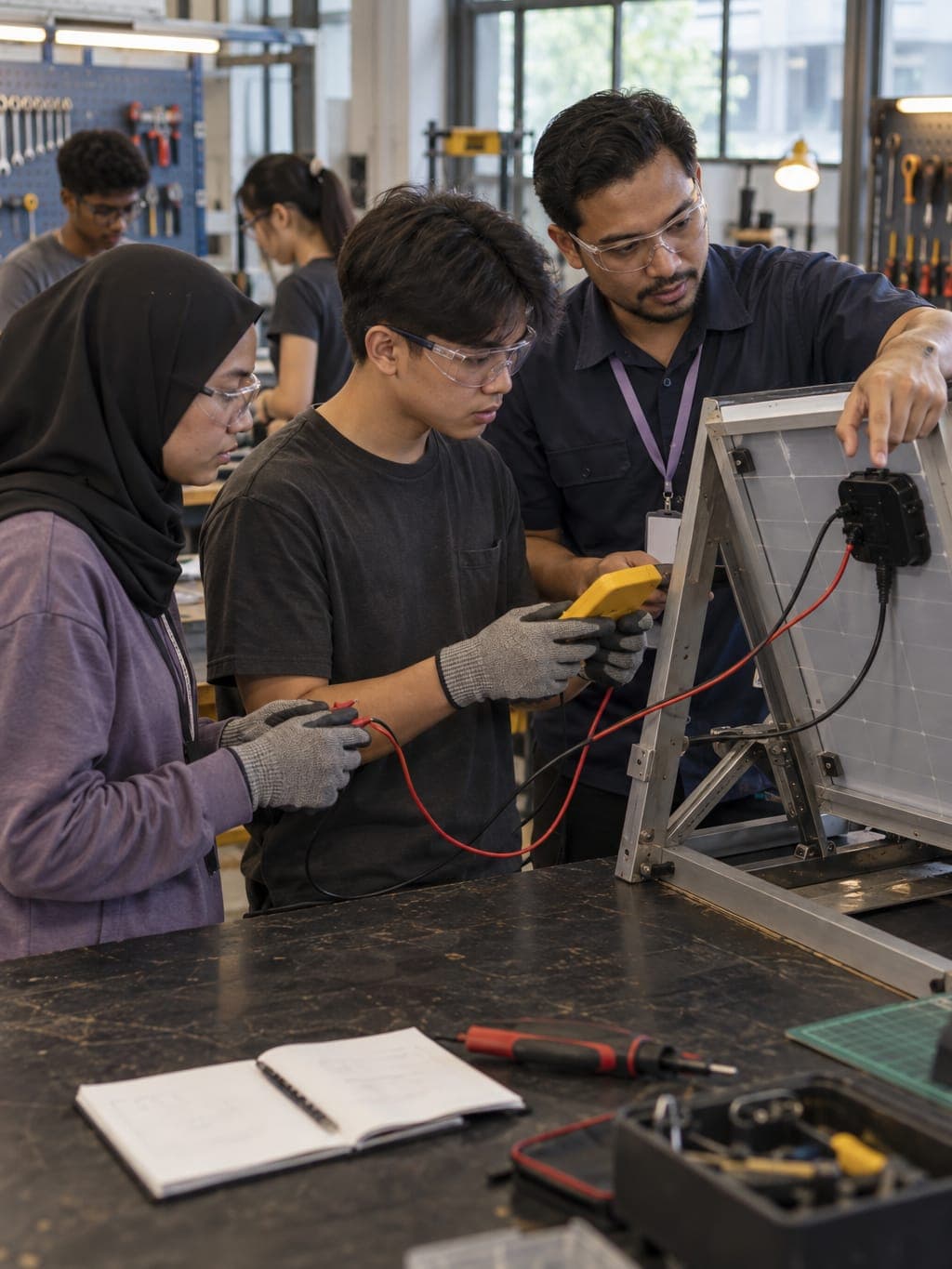
Engineering & Skilled Trades
Make, fix and power the things everyone relies on.
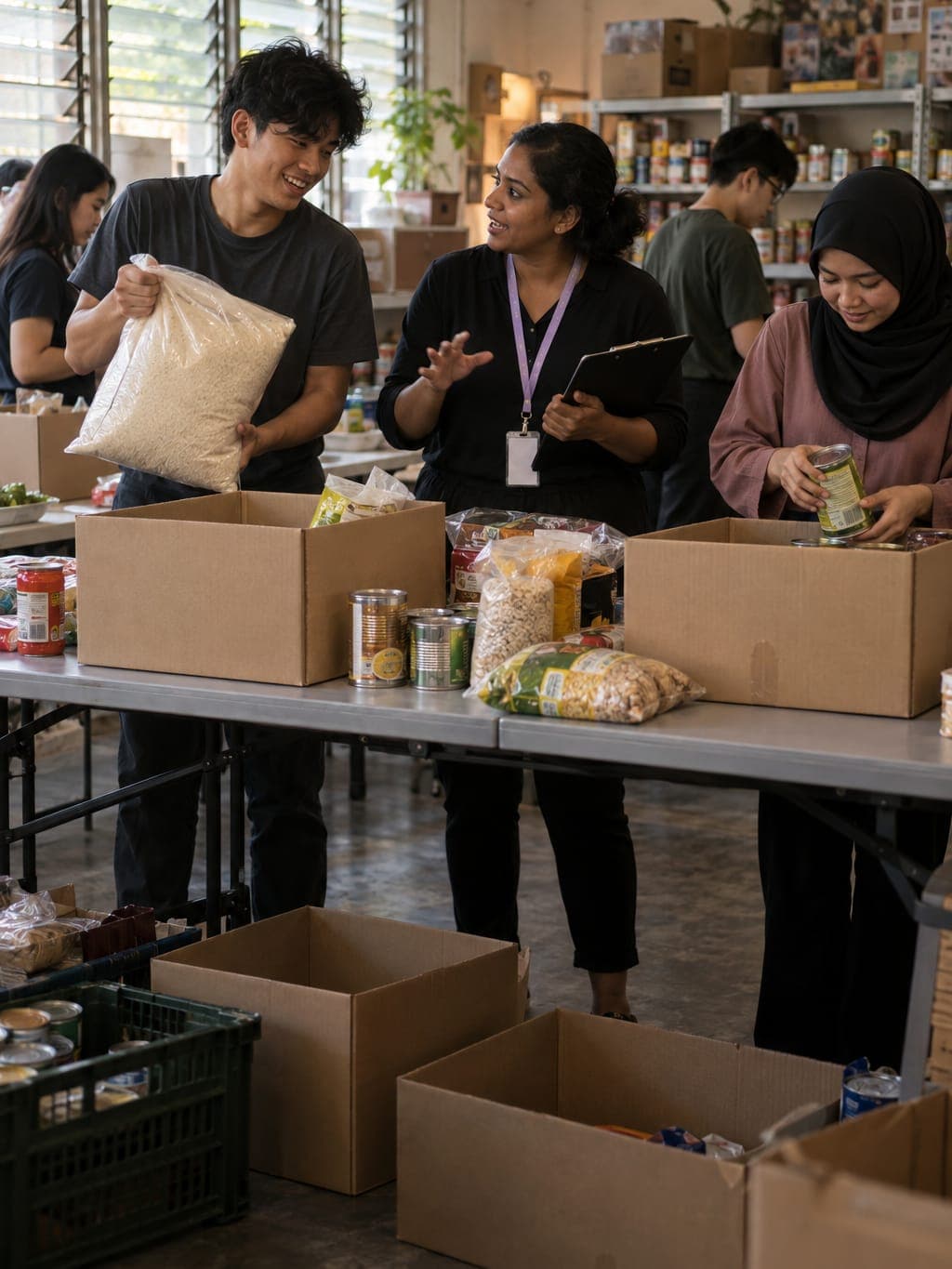 Social impact
Community & Social Impact
Create change where it matters.
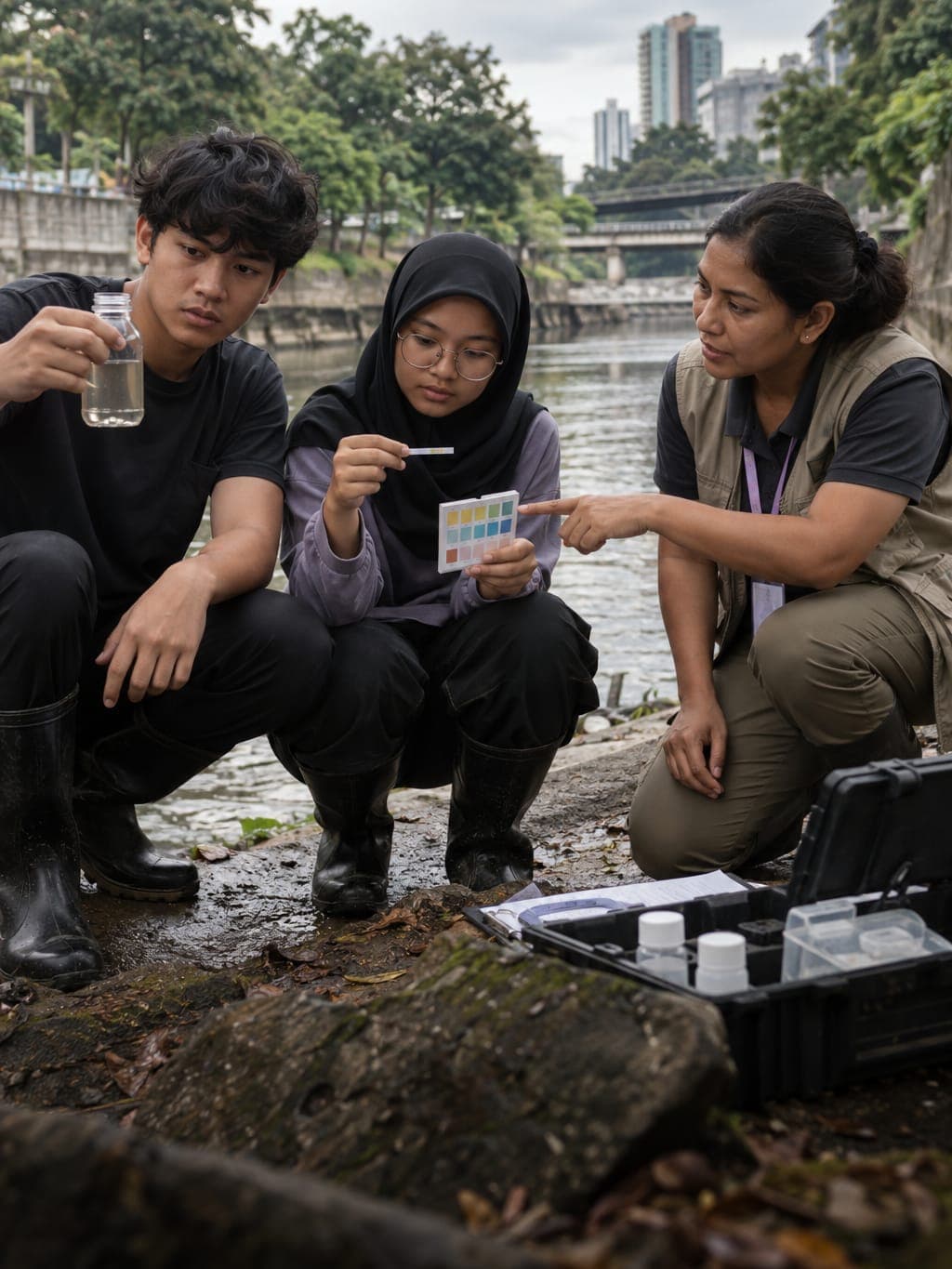 Green
Environment & Sustainability
Build a more resilient future.
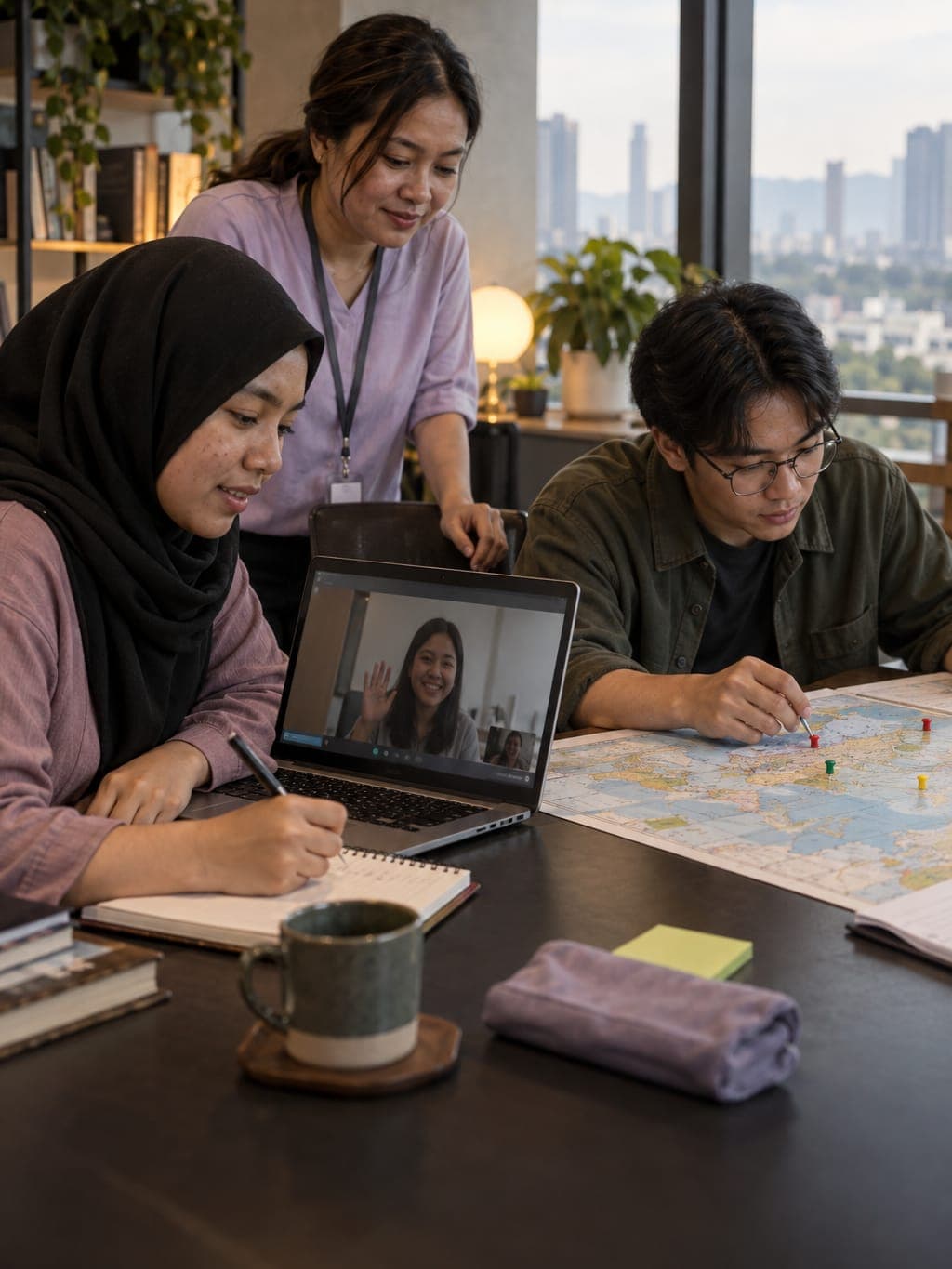 Global
 Opportunities
Explore study, work and exchange pathways.
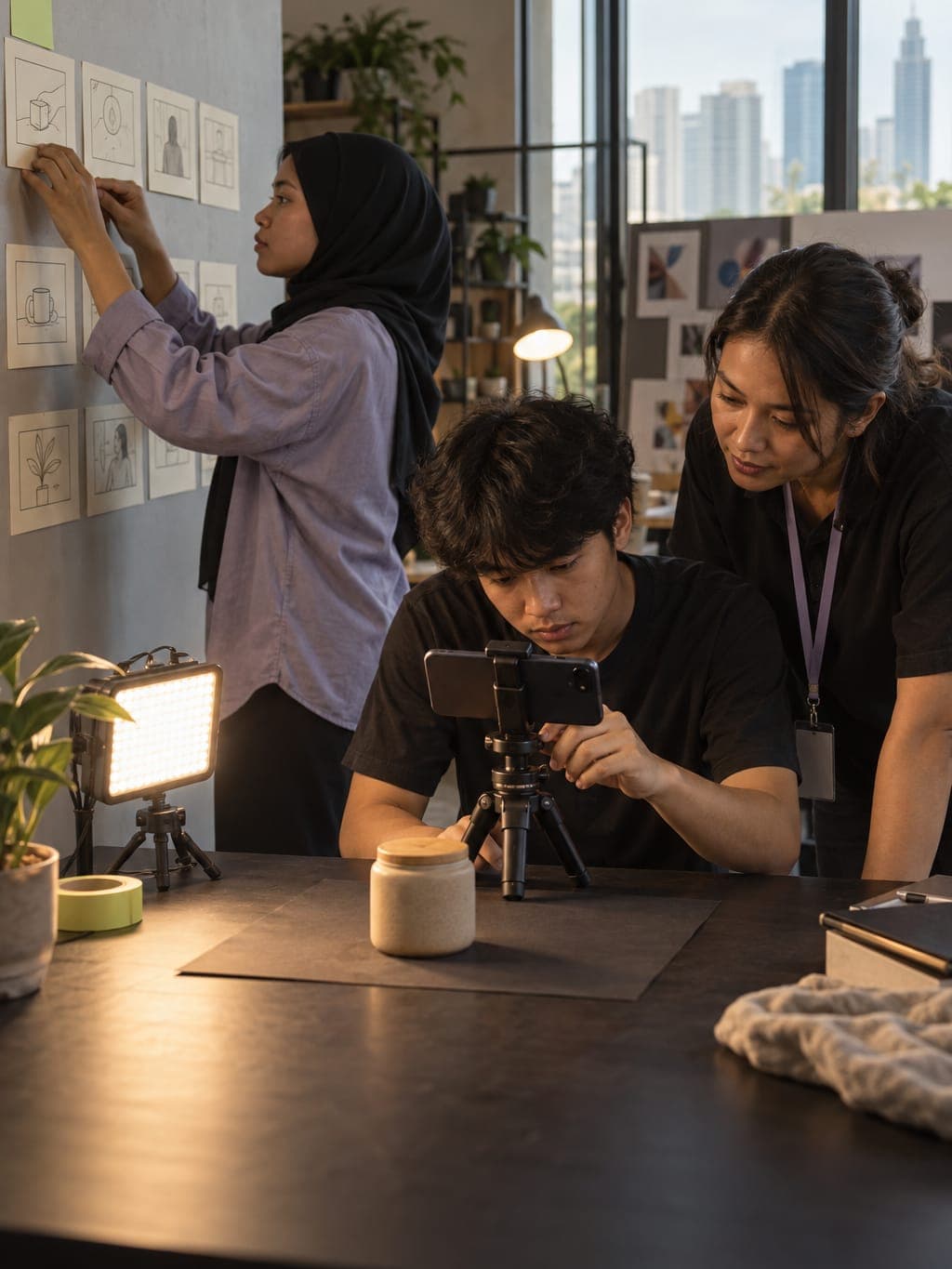 Creative
Media & Creative
Content, design, film, marketing and more.
 Tech
Technology & AI
Build, create and solve real-world problems with technology.
Try Health & Science for real
After you book, you rank the eight areas. Your top picks shape your two Day 2 tasters; the team sets the final groups.